
Finding a snake in your yard or garage is unsettling, but here is the reassuring truth: the vast majority of snakes people meet are harmless, non-venomous, and actually working for you by eating rats and mice. A snake is not there by accident. It came for the food and shelter your property is offering, and the lasting way to get rid of it is to take those away, not to reach for a repellent or a shovel. Remove the rodents it hunts, clear the cover it hides in, and seal it out.
The short answer: get rid of snakes by making your yard unwelcoming. First control rodents, because a snake problem is usually a rodent problem. Then remove the cover snakes hide in (tall grass, and wood, rock, and debris piles) and seal gaps a quarter inch and larger around your foundation, doors, and vents. Skip the mothballs, sulfur, and ultrasonic gadgets, which do not work and, in the case of mothballs used outdoors, are illegal. And do not try to kill or catch a snake, because that is exactly how most people get bitten. If a snake is indoors, or you cannot identify it, call a professional.
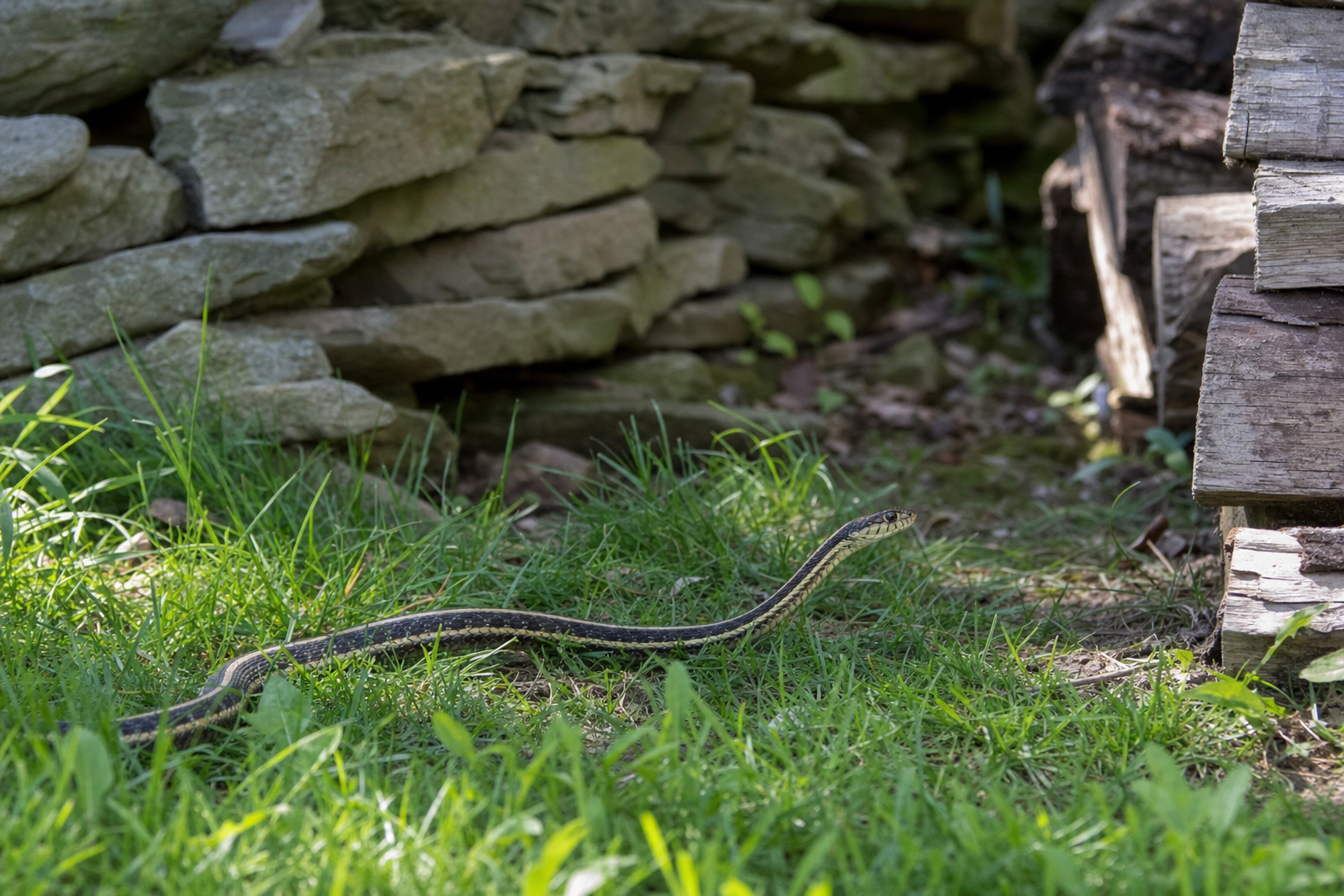
First, Know This: Most Snakes Are Harmless and Helpful
Before you do anything, take a breath. Most snakes found around homes are harmless species like garter, rat, king, and garden snakes, and they are among the best natural rodent control you can get. Killing them is usually unnecessary, is often illegal (many states protect native snakes), and, most importantly, is the single most common way people get bitten. So the goal here is not to wage war on snakes. It is to make your property a place they have no reason to visit.
One safety point up front, because a lot of internet advice on this is dangerously wrong: you cannot reliably tell a venomous snake from a harmless one by the shape of its head or its pupils. Plenty of harmless snakes flatten their heads into a triangle and vibrate their tails to bluff you, and you should never get close enough to study a snake’s eyes. The safe rule is simple: if you cannot positively identify a snake from a distance, treat it as if it could be dangerous, keep well back, and leave it alone.
Why Snakes Come to Your Yard
Snakes show up for three reasons. Fix these and the snakes leave on their own, because the buffet and the hiding spots are gone.
- Food, which almost always means rodents. Rats, mice, and other small critters are what most yard snakes are hunting. If you have snakes, you very likely have a rodent population feeding them. This is the single biggest lever you have.
- Cover to hide in. Snakes are shy and need places to shelter from heat and predators: tall grass, wood and brush piles, rock walls, leaf litter, and clutter along the foundation or under sheds and porches.
- Cool, damp shelter. In warm weather snakes seek out cool, moist, sheltered spots, which is why they turn up in basements, crawl spaces, and shady debris.
How to Get Rid of Snakes, Step by Step
1. Take away their food: control rodents
This is the most important step and the one most people skip. As long as your yard feeds mice and rats, it will draw the snakes that eat them. Store pet food, birdseed, and garbage in sealed, rodent-proof containers, clean up spilled seed and fallen fruit, and deal with any active mouse or rat problem directly. Cutting off the food supply removes the reason snakes are there in the first place. For the rodent side of this, see our guides to getting rid of rats and getting rid of mice.
2. Take away their cover
Make your yard too open and exposed for a shy snake to feel safe. Keep the grass mowed short, especially around the house and outbuildings. Remove or relocate the harborage they hide in: stacks of lumber and firewood, rock and brick piles, brush and leaf piles, and general clutter. Keep firewood on a rack at least a foot off the ground and away from the house, and trim back dense shrubs and ground cover touching the foundation. A tidy, open yard is a snake-unfriendly yard.
3. Seal them out
Snakes get into homes and garages through surprisingly small openings: torn screens, gaps under doors, foundation cracks, and the holes around pipes and utility lines. Seal every gap a quarter inch and larger. Install tight door sweeps, repair damaged screens and vents, caulk or foam around utility penetrations, and mortar cracks in the foundation. For a yard or area you really want to protect, you can build a snake-proof fence: quarter-inch galvanized hardware cloth, 36 inches tall, buried 4 to 6 inches into the ground, and angled outward at the top so snakes cannot climb over.
4. Let a snake that is already there move on
If you find a single snake in the yard, the easiest solution is usually to leave it alone and give it room to leave, which it will. Do not corner it, poke at it, or try to grab it. For a snake you are certain is harmless, you can gently encourage it toward an exit from a safe distance with a broom or a spray from the garden hose. For any snake indoors, any snake you cannot identify, and any snake you suspect is venomous, do not attempt removal yourself. Call a licensed wildlife-removal professional or your local animal control.
Do Snake Repellents Actually Work?
This is where a lot of money and effort get wasted. University extension programs have tested the popular snake repellents and home remedies, and the verdict is blunt: there is no proven, registered snake repellent. Here is the honest picture.
| Product or remedy | What the evidence says | Verdict |
|---|---|---|
| Commercial repellents (naphthalene and sulfur, such as “Snake-A-Way”) | Failed to repel snakes in controlled university trials | Does not work |
| Mothballs (naphthalene) scattered outdoors | No evidence they repel snakes, and using them this way is an illegal, off-label pesticide use that is toxic to kids, pets, and wildlife | Illegal and ineffective |
| Powdered sulfur, lime, cayenne pepper | Tested by extension programs and did not work | Does not work |
| Ammonia, cinnamon or clove oil, cedar oil | No reliable evidence they repel snakes | Unproven |
| Ultrasonic and vibrating “sonic stake” devices | No scientific evidence of any effect on snakes | Does not work |
| A rope circled around your campsite or sleeping bag | Pure folklore; snakes cross rope without a second thought | Myth |
The honest takeaway: no spray, powder, or gadget reliably keeps snakes away. Spend your effort on rodent control, cover removal, and sealing instead. We take a closer look at the popular options in our guide to natural snake repellents.
Venomous or Not? How to Tell Safely
The United States has only four kinds of native venomous snakes: rattlesnakes, copperheads, and cottonmouths (also called water moccasins), which are all pit vipers, plus coral snakes. Which ones live near you depends entirely on your region. As noted above, the “triangular head” and “pupil shape” tricks are unreliable and unsafe, so do not stake your safety on them. If you cannot positively identify a snake from a safe distance, treat it as dangerous and leave it alone.
It is also worth knowing the harmless snakes that get killed by mistake, because they are the ones most likely to be in your yard and they are on your side:
- Garter snakes and rat snakes (including corn snakes and black snakes) are harmless and are excellent rodent hunters.
- Kingsnakes are harmless and actually eat other snakes, including venomous ones, so they are worth protecting.
- Harmless water snakes are routinely killed as “cottonmouths,” and gopher and bull snakes mimic rattlesnakes by hissing and vibrating their tails, so both die by mistaken identity.
For the venomous species, see our guides on rattlesnakes, timber rattlesnakes, and cottonmouths, and for a common harmless one, our guide to corn snakes.
What to Do If a Snake Bites You
A venomous snakebite is a medical emergency, but the right response is calmer and simpler than the dramatic myths suggest. If you or someone else is bitten:
Do this:
- Move away from the snake so it cannot bite again, and get to safety. Do not try to catch or kill it.
- Call 911 or Poison Control at 1-800-222-1222 right away, and get to a hospital, where antivenom is the real treatment.
- Stay as calm and still as you can, and limit movement to slow the spread of venom.
- Remove rings, watches, and anything tight before swelling starts.
- Keep the bitten limb still and roughly at the level of the heart, in a comfortable position.
- Gently wash the bite with soap and water and cover it with a clean, dry dressing.
- If you can do it safely from a distance, take a photo of the snake to help doctors, but never chase or handle it.
Do not do any of these, despite what old movies and “snakebite kits” claim:
- Do not cut the wound.
- Do not try to suck out the venom, and do not use a suction “snakebite kit.”
- Do not apply a tourniquet or a tight constricting band.
- Do not apply ice or soak the bite in water.
- Do not drink alcohol or caffeine, and avoid aspirin or ibuprofen.
- Do not wait for symptoms before getting help.
Keep this in perspective: only around five or six people die from snakebite in an average year in the United States, and most bites happen when someone is trying to handle or kill the snake. Give snakes their space and your risk drops to almost nothing.
Should You Kill a Snake in Your Yard?
No, and there are three good reasons. First, it is dangerous: reaching for a snake with a hoe or shovel is the classic way to earn a bite. Second, it is often illegal, because many states protect their native snakes as nongame wildlife. Third, it is self-defeating: the harmless snakes you would be killing are the ones keeping your rodent population down, and killing one does nothing to stop the food and shelter that drew it in. Exclusion and habitat work solve the problem for good. Killing does not.
When to Call a Professional
Handle the yard work yourself, but bring in a licensed wildlife-control or pest professional when a snake is inside your home, when you find a venomous snake close to where people or pets spend time, or when you simply cannot identify what you are dealing with. A professional can safely remove and relocate the snake and help you find the entry point it used, so the next one cannot follow.
How to Keep Snakes Away for Good
- Control rodents first: secure pet food, birdseed, and garbage, and deal with any mouse or rat activity.
- Keep the lawn mowed short, especially around the house and outbuildings.
- Remove wood, brush, rock, and leaf piles, and store firewood on a rack off the ground and away from the house.
- Seal gaps a quarter inch and larger, add door sweeps, and repair screens and vents.
- Skip the repellents. No mothballs, sulfur, or ultrasonic devices, none of which work.
- Leave snakes alone and let them move on, and call a pro for any indoor or venomous snake.
Related Snake Guides
- How to get rid of rattlesnakes
- How to get rid of timber rattlesnakes
- How to get rid of cottonmouth snakes
- How to get rid of corn snakes
- How to get rid of black rat snakes
- How to get rid of kingsnakes
- How to get rid of garter snakes
- How to get rid of northern water snakes
- Black snakes: identification and facts
- Gopher snakes: identification and facts
- How to identify snake droppings
- Natural snake repellents: do they work?
Frequently Asked Questions
What is the best way to get rid of snakes?
Make your yard unwelcoming rather than trying to kill or repel them. Control the rodents that feed them, remove the tall grass and the wood, rock, and debris piles they hide in, and seal gaps a quarter inch and larger around your home. Take away the food and shelter and the snakes leave on their own. Repellent sprays and gadgets do not work.
Do snake repellents like mothballs or sulfur actually work?
No. University trials have found that mothballs, sulfur, lime, cayenne, commercial naphthalene repellents, and ultrasonic devices do not keep snakes away. On top of being useless, scattering mothballs outdoors is an illegal pesticide use that is toxic to children, pets, and wildlife. Put your effort into rodent control and habitat cleanup instead.
How do I know if a snake is venomous?
Do not rely on the head shape or pupil myths, which are unreliable and require you to get dangerously close. The United States has four kinds of venomous snakes: rattlesnakes, copperheads, cottonmouths, and coral snakes, and which ones are near you depends on your region. If you cannot positively identify a snake from a safe distance, treat it as dangerous, keep well back, and leave it alone.
Should I kill a snake in my yard?
No. It is dangerous, since trying to kill a snake is how most people get bitten; it is often illegal, because many states protect native snakes; and it is pointless, because the harmless snakes are controlling your rodents and killing one does nothing about the food and shelter that attracted it. Exclude and clean up instead.
What should I do if a snake bites me?
Get away from the snake, stay calm, and call 911 or Poison Control at 1-800-222-1222 immediately, then get to a hospital for antivenom. Remove rings and tight items, keep the limb still and roughly at heart level, and wash the bite. Do not cut it, suck it, apply a tourniquet, or use ice. Most bites happen while trying to handle or kill a snake, so the best prevention is to leave it alone.