

Deer flies are the fast, biting flies that circle your head on a summer hike and leave a painful, itchy welt. They are stubborn, but with the right protection you can keep them off you. For the non-biting flies around the house, see our guide to how to get rid of flies.
What actually repels deer flies? The most reliable approach is permethrin on your clothing plus a DEET or picaridin repellent on exposed skin, paired with a sticky deer-fly patch or trap on your hat. Essential oils help a little, but they are weak against deer flies specifically, because these flies hunt by sight and movement more than by smell.
Below you will find what a deer fly is, why its bite hurts, the diseases it can carry, and the repellents, traps, and tactics that genuinely keep them away.
What Is a Deer Fly?
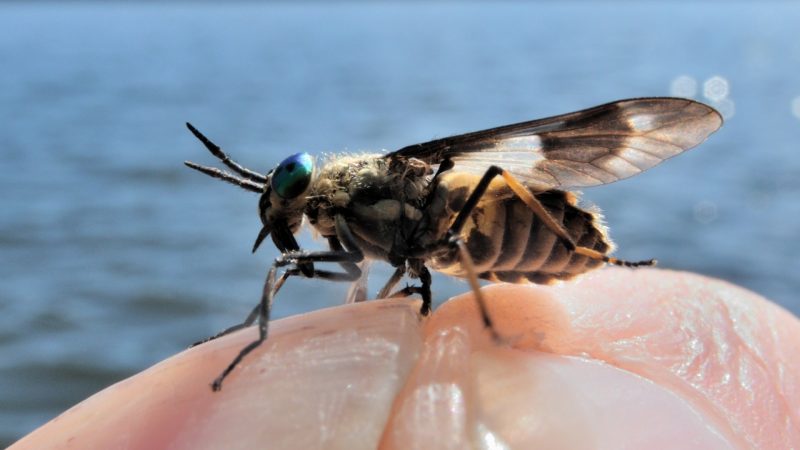
A deer fly is a bloodsucking insect pest to both humans and animals such as cattle and horses. Also known as sheep flies in some locations, they range between 7-10 mm (0.28 – 0.40 in). Deer flies are common in most geographical locations except in Iceland and Hawaii.
What Does a Deer Fly Look Like?
Deer flies look a lot like common houseflies, a familiar sight to most people. But unlike houseflies, deer flies are much bigger. In addition, they have yellow or black colors, striped abdomen, shiny colored compound eyes, and sport dark bands on their clear wings.
Where Do Deer Flies Live?
Deer flies live in various places but the common feature in these locations is dampness. As such, you’ll find them near damp areas, wetlands, or wooded areas. These places offer the deer flies good breeding grounds where they can lay their eggs.
What Is the Life Cycle of a Deer Fly?
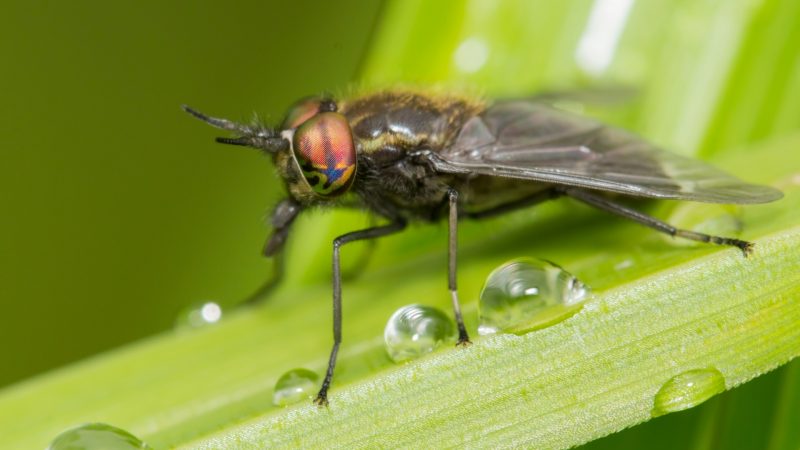
Female deer flies lay eggs in masses of 25-1000 on aquatic vegetation, overhanging foliage, or projecting rocks. You can spot their larvae in the moist soil along stream banks, pond edges, marshes, or wetlands where they fall after hatching. While some are aquatic, others develop in moist forest soils or decomposing wood. The eggs hatch after 2-3 days.
The larvae stage lasts for 1-3 years, depending on the deer fly species. Once mature, they crawl to drier places where they become pupae and adults after 2-3 weeks.
Most deer fly species complete one generation each year, though smaller species can manage 2-3 per year.
What Do Deer Flies Eat?
Deer flies eat different types of food in their lifetime. As they develop, the larvae feed on decaying organic matter and organisms sourced from the soil or water. On the other hand, adult female deer flies feed on blood sucked from their prey while the males consume pollen and nectar.
Related: How to Get Rid of Horse Flies | Long-Term Results!
Deer Fly Bite
Now, let’s talk about whether or not deer flies bite and if they pose a risk to your health.
Do Deer Fly Bite?
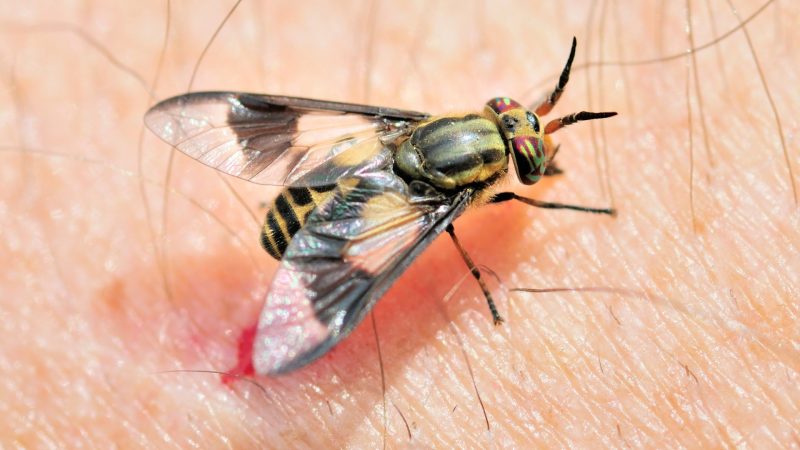
Deer flies bite. They inflict deep wounds on cattle leading to significant blood loss due to the presence of an anticoagulant in the saliva. Additionally, they reduce milk production and interfere with the grazing of cattle and horses since the animals tend to bunch together or take off wildly while under attack.
Like mosquitoes, female deer flies are responsible for the painful bites since they require blood to make viable eggs. The aggressive and persistent flies bite their moving hosts on the head and shoulders, even returning to continue biting if interrupted. Male deer flies, on the other hand, pose no harm.
How Do You Treat Deer Fly Bites?
To treat a deer fly bite, clean the area with soapy water, then apply a first aid-type skin cream to help relieve the pain. Applying ice to the bite site can also help to ease the pain. Also, after consultation with your doctor, you can take anti-allergy medications to help with the itching and prevent secondary infection.
How Long Do Deer Fly Bites Last?
Deer fly bites can last longer than two days, depending on their intensity. As mentioned earlier, deer fly bites can be extremely painful because they use their sharp mouthparts to slice through your skin. The resultant irritation and swelling will normally ease off within a day or two though scratching the site can cause secondary infections.
Do Deer Fly Bites Itch?
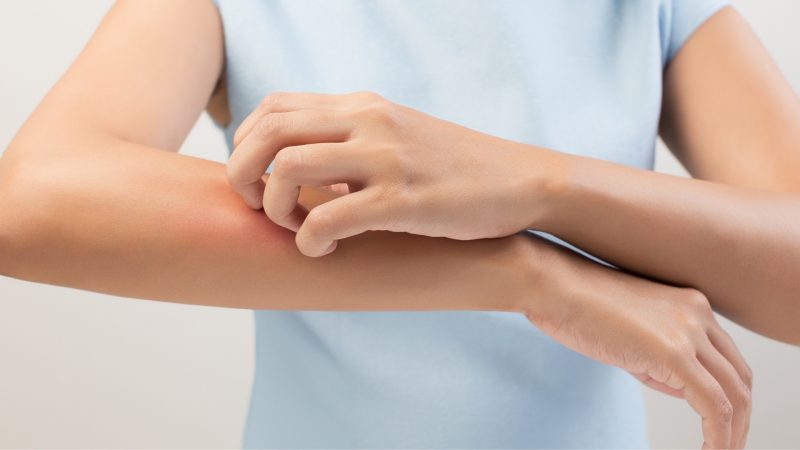
Deer fly bites itch. The red bumps that develop around the bite site can even be extremely itchy and might cause you to scratch the area continuously leading to more serious irritation or even infection. Therefore, it’s best to avoid scratching the area.
Allergy to Deer Fly Bite
For most people, deer bites might only cause painful, itchy bites and nothing more. However, the bites can also cause an allergic reaction due to the salivary secretions released as the insects feed. In extreme cases, this might include cases of hives and wheezing.
What Diseases Do Deer Flies Carry?
Deer flies carry and transmit a wide range of diseases and parasites through their bites, including anthrax, hog cholera, tularemia (rabbit fever), anaplasmosis, and equine infectious anemia. Tularemia can be fatal, and you require antibiotics if you get it. Therefore, deer flies pose a great risk to public health.
Do Deer Flies Carry Lyme Disease?
There’s no scientific proof yet that deer flies carry Lyme disease (Lyme borreliosis), although deer flies harbor organisms similar to Borrelia burgdorferi in regions where Lyme disease occurs. Still, many people usually associate deer flies with infectious diseases.
What Are Deer Flies Attracted To?
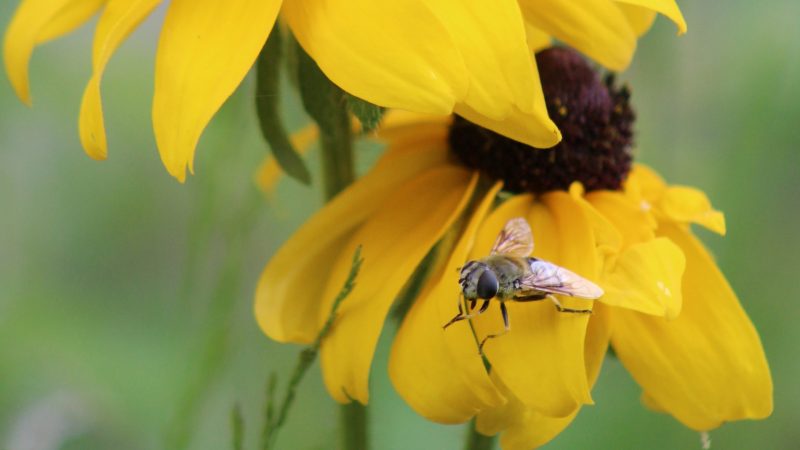
Deer flies are attracted to their prey by sight, smell, warmth, movement, dark colors, shiny surfaces, or the presence of carbon dioxide. They’re most active during the daytime in hot summer or early fall, so if you have a deer fly problem, these are the times when you should be most careful and protect yourself.
7 Best Deer Fly Repellents Review
Let’s look at some of the best deer fly repellents that are available on Amazon:
1. All Terrain Natural Insect Repellent
No products found.
This effective insect repellent is excellent for keeping deer flies away while camping, hiking, or hanging outdoors. It’s both DEET and GMO-free, making it ideal for use on sensitive skin, eco-friendly, and won’t damage your clothes or gear.
Additionally, this insect repellent works naturally as it contains a potent mixture of essential oils such as citronella, peppermint, and lemongrass. It’s safe to use around your pets too.
2. Sawyer Picaridin Insect Repellent
No products found.
This fragrance-free, long-lasting insect repellent is quite effective against deer flies, odorless, and safe on synthetic clothing and gear. More effective than DEET in protecting you from deer fly bites, its non-greasy, quick-drying formulation makes it safe to use on your hiking gear, plastics, and synthetic coatings. It’s available in lotion and spray form.
3. 3M Ultrathon Insect Repellent
No products found.
This insect-repellent lotion contains 34.34% DEET. It offers excellent protection against deer flies and their bites using a controlled-release technology that offers day-long protection. The product is also available as a spray. You don’t need heavy application either and can use it like regular lotion.
4. Sawyer Premium Insect Repellent
No products found.
This insect repellent works on your clothes and gear. It adds a protective layer that keeps you safe from deer flies when outdoors. The permethrin spray doesn’t stain or damage your fabrics and can last through a maximum of 6 washings. For best results, use the product alongside Sawyer Picaridin Insect Repellent Lotion.
No products found.
5. BUGGINS Original Insect Repellent
No products found.
This product offers extreme protection against deer flies and other biting insects. Available in a twin pack, this odorless insect repellent is suitable for individuals who are allergic to fragrances. The spray combo pack contains DEET and 2x biting fly repellent for extra protection.
6. Buggins Natural Insect Repellent
No products found.
This all-natural insect repellent contains essential oils like geraniol, peppermint oil, and lemongrass oil. Peppermint oil is well-known for its ability to repel deer flies. The product has no chemicals, including DEET, and comes in a spray bottle, making it easy to use.
7. Coleman 100 Max Insect Repellent
No products found.
This product offers strong protection against deer flies and other harmful insects as it contains 100% DEET. The bug spray can withstand water and sweat to offer you almost 10 hours of effective coverage and is one of the strongest deer fly repellents available. A small amount goes a long way, plus you don’t need to rub in the product.
How To Get Rid of Deer Flies Naturally?
While few practical ways to control deer flies or eliminate them exist, there are several natural ways to get rid of them. Also, dragonflies, toads, frogs, wasps, spiders, hornets, and birds form natural deer fly predators.
To get rid of deer flies naturally, try the following:
- Use homemade insect repellent sprays and lotions.
- Use deer fly patches that you can stick on your hat, pants, or wrists.
No products found.
- Use sticky traps like Rescue Trapstick or fly traps that are safe to use around your pets.
No products found.
- Place a dryer sheet on the inside of your hat to help repel the flies.
- Eliminate potential breeding grounds by clearing decaying vegetation from your yard.
Here’s a short YouTube video on how to get rid of deer flies when working in your yard:
How To Keep Deer Flies Away?
To keep deer flies away, here are useful tricks to help you:
The single most effective measure is treating your clothing with permethrin. Field studies have reported it can cut deer fly activity by around 95%. Permethrin bonds to fabric (not skin) and lasts through several washes, so it protects you long after a skin spray wears off. Pair it with a skin repellent and a hat trap for the best results.
- Use a mixture of essential oils like peppermint, catnip, eucalyptus, citronella, and lavender to repel the deer flies.
No products found.
No products found.
No products found.
No products found.
No products found.
- Remain still; deer flies are attracted to movement, so this might deter them.
- Tie a red rag onto a long plastic pipe strapped to your hat-the flies will swarm around the flag instead of your head.
- Craft or buy a life-size dragonfly to pin to your hat to help keep the persistent flies away.
- Wear protective clothing such as thick long sleeve shirts and pants and a hat when outdoors.
- Treat your clothes with permethrin and wear a head net when in infested areas.
- Wear a hat with an adhesive surface to form a deer fly trap.
- Avoid dark colors and dress in light-colored clothes instead.
- Use permethrin-based sprays on cattle and horses-they irritate the flies causing them to leave-or permethrin repellents on clothes.
- Use insect repellents containing picaridin or DEET.
- Use pesticides such as permethrin space sprays or fogging treatments in areas where large deer fly swarms occupy small areas. Alternatively, you can use pyrethrin sprays though they’re not as effective.
The downside to using pesticide treatments is that they only kill on contact but wear off pretty quickly, leaving no lasting pest control effects. Furthermore, exposure to the chemical can cause irritation in both humans and pets.
Frequently Asked Questions
What actually repels deer flies?
Permethrin on clothing plus DEET or picaridin on exposed skin is the most reliable combination, and a sticky hat patch or trap adds physical protection. Essential-oil sprays give only mild, short-lived relief, because deer flies track you by sight and movement rather than scent.
Does DEET work on deer flies?
Yes, DEET helps, especially at higher concentrations, but deer flies are persistent and aim for your head and hairline where repellent is hard to keep applied. That is why permethrin-treated clothing and a hat trap matter as much as the skin repellent itself.
Why do deer flies keep circling my head?
They are drawn to the highest point of a moving, dark, warm target that gives off carbon dioxide, which is usually your head. That is also why a sticky patch on the top of your cap catches so many of them.
When are deer flies worst?
They are most active on hot, sunny days in summer and early fall, during daylight hours. Their activity drops noticeably in shade, in wind, and once temperatures cool.
Other Deer Fly Control Products
Here are other deer fly control products from Amazon that you can use to help you with your deer fly problem:
Best Deer Fly Traps
- Bug Ball Fly Trap
No products found.
This odorless, environmental-friendly insect killer is effective in killing deer flies and doesn’t require you to use pesticides or electricity. Thus, it’s safe to use around kids and pets.
- Starbar Fly Terminator Pro
No products found.
This reusable insecticide-free product has a pungent odor that easily attracts deer flies to their death. The jug trap comes with a handle that makes it easy to hang.
Best Deer Fly Sticky Strips
- Tred-Not Deerfly Patches
No products found.
These odorless, chemical-free patches attach to your cap. They’re effective in preventing deer fly bites as they trap the flies buzzing around your head.
- Catchmaster Giant Fly Glue Trap
No products found.
The strong and durable sticky insect glue works by getting the deer flies stuck on the tube. This easy-to-use product is ideal for use around kids or pregnant women.
Best Bug Spray for Deer Flies
- Repel Insect Repellent
No products found.
Ideal for your outdoor adventures, this non-greasy, DEET-free insect repellent features a cool, refreshing scent that gives you all the protection you need against deer flies.
- Sawyer Permethrin Clothing & Gear Insect Repellent
No products found.
This product is suitable for your outdoor clothing and gear including tents, sleeping bags, and nets. It also holds through several washings.
Unfortunately, it’s not easy to effectively control or eliminate deer flies because insect repellents hardly deter them. They aim for your head and make their way underneath the hair to the skin. Besides, they don’t rely on scent to locate their prey, so scent repellents are ineffective.
Additionally, the use of strong insecticides isn’t advisable. It could adversely affect deer flies’ environmentally sensitive habitats by harming the wetlands, drainage system, and water supplies. Furthermore, being strong fliers, the flies can move from far distances, meaning that their breeding sites could be extremely extensive or located far from the problem site.
Related: How To Get Rid of House Flies? | Effective Techniques
List of Sources
Townsend, L. (2000). Horse Flies and Deer Flies. University of Kentucky Entomology.
Squitier, J. M. (1998). Deer flies, yellow flies and horse flies. University of Florida.
Hill, C., MacDonald, J. (2008). Horse and Deer Flies. Purdue University.
Mizell, R. F. (1998). The Trolling Deer Fly Trap. North Florida Research and Education Center, University of Florida.

- Bed Bug Surge 2025: How to Detect, Prevent, and Safely Eliminate Infestations in Top U.S. Cities - June 18, 2025
- Asian Needle Ants Invade US Homes: 2025 Guide to Identification, Risks, and Effective Control - June 11, 2025
- New World Screwworm Alert: How US Livestock Owners Can Prevent Outbreaks and Protect Herds [Summer 2025 Update] - June 8, 2025