
There are around 4000 different species of cockroaches on our planet (approximate estimate based on entomological surveys). The ones most likely to sneak into homes include the German cockroach, American Cockroach, brown-banded cockroach, and Oriental Cockroach. In most infestations the culprit is the German cockroach, which is highly adapted to living in human habitations.
Want to know which roach is in your house? Which one is the worst? Can any cockroaches fly? Read on — this guide walks through identification, common hiding places, health concerns tied to specific species, and simple distinguishing checks so you can spot the right insect quickly.
General Characteristics of Cockroaches
Recognizing a cockroach is usually straightforward. These insects have flat, somewhat oval bodies and long antennae that help them sense food and danger. Their color ranges from pale tan to dark brown or nearly black. Most species have six legs (cockroaches have six legs), and adult body lengths commonly fall between about 0.5 and 2 inches (0.5–2 in).
Some roaches display remarkable resilience. For instance, certain species tolerate cold better than expected and some individuals can hold their breath for up to ~45 minutes (reported in laboratory observations). There are also classic, often-cited survival anecdotes about surviving severe injury; for context these are extreme cases rather than the norm (live for a week without their head is an unusual laboratory observation).
They move fast — some cockroaches can run at speeds roughly equivalent to 3 miles per hour when startled (this is an upper-range observation used to convey how quickly they scatter). Survival traits also include the ability to go without water for about two weeks and the capacity to survive around a month without food under some conditions.
Reproduction rates vary considerably by species. For example, the German cockroach reproduces quickly compared with many outdoor species: under warm, resource-rich conditions one female German cockroach and her descendants can theoretically expand to tens of thousands of individuals within a year (figures such as ~30,000 are used in pest-management literature to illustrate worst-case exponential growth for German cockroaches; see the German-cockroach-specific sources below for methodology and context).
Domestic vs. Peridomestic Cockroaches
Cockroaches are often classified as domestic or peridomestic. Domestic species are those that rely on human-built environments and resources to thrive; they reproduce and live predominantly where people live. The German and brown-banded cockroaches are good examples of domestic species
Peridomestic species do not require people to survive but will opportunistically enter buildings when conditions outside become unfavorable. The oriental cockroach and the American Cockroach fit this description: they live largely outdoors but will invade structures for shelter, moisture, or food.
Cockroaches can affect human health. They are associated with mechanical transmission of bacteria such as salmonella and E. coli (this connection is documented in public-health and extension resources; the specific studies and extension notes cited at the end of this article address these risks). Additionally, proteins in roach feces, saliva, and shed exoskeletons are known triggers for allergic reactions and can worsen asthma symptoms in sensitized individuals (see sources list for details and cited authors).
Types of House Cockroaches — Identification Chart
Both domestic and peridomestic cockroaches appear inside homes. Below, each common species is shown with consistent subheadings to help you scan: Size & Color, Distinctive Marks, and Typical Hiding Places. Sizes use inches with ranges where appropriate.
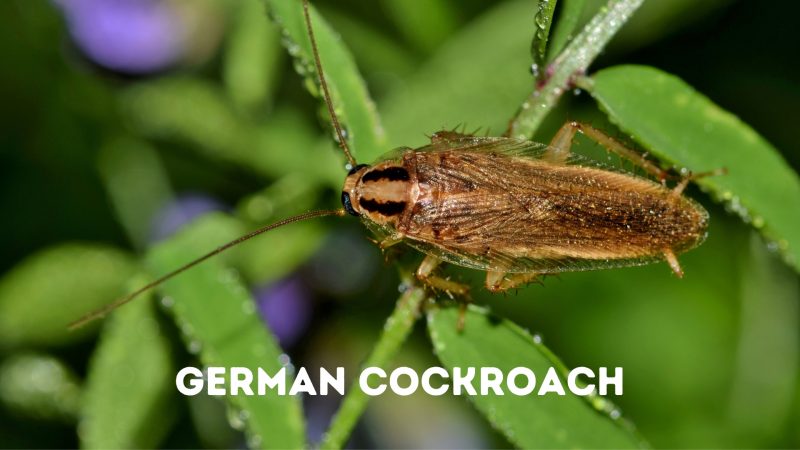
German Cockroach
- Size & Color: ~0.5 in (about a half inch); light tan to tan-brown.
- Distinctive Marks: Two dark, nearly parallel vertical stripes on the pronotum (just behind the head); adults have wings but do not fly well.
- Typical Hiding Places: Warm, moist indoor areas: behind and under dishwashers, around stove and sink cabinets, inside wall voids near kitchens and bathrooms.
Quick checklist for field ID:
- Small size (~0.5 in)
- Two dark stripes behind the head
- Found inside kitchens/bath areas, near food prep
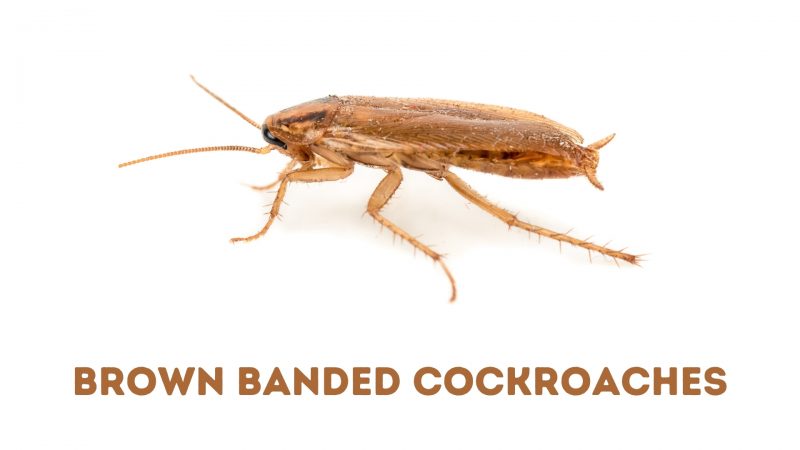
Brown-Banded Cockroach
- Size & Color: ~0.5 in (one of the smallest household roaches); reddish-brown.
- Distinctive Marks: Pronounced pale bands across the wings/bodies (banding pattern makes them stand out).
- Typical Hiding Places: Warm, dry locations away from food: dressers, closets, picture frames, clocks, and behind loose wallpaper.
Quick checklist for field ID:
- Small and banded
- Prefers dry indoor niches
- Often found higher off the floor than German roaches
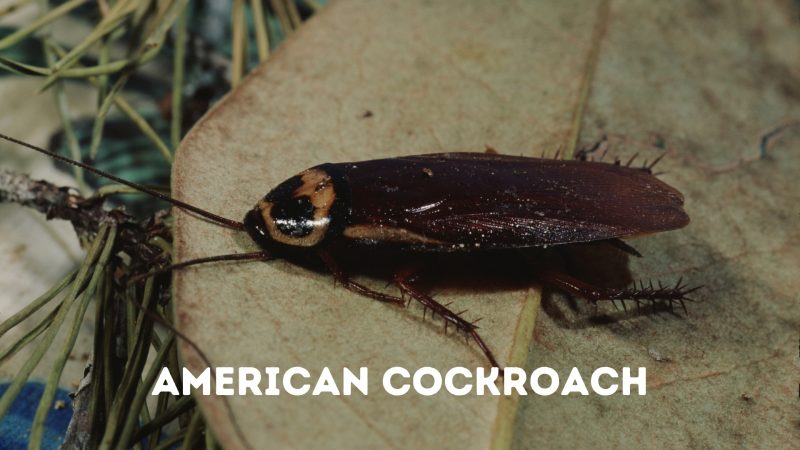
American Cockroach
- Size & Color: ~1.5–2 in; reddish-brown and shiny.
- Distinctive Marks: Yellowish band or mark behind the head (sometimes appears like an “8”); long antennae and fully developed wings.
- Typical Hiding Places: Often outdoors in leaf litter, sewers, or around mulch; will enter basements, sewers, storm drains, and building crawlspaces — indoors they appear in basements and boiler rooms.
Quick checklist for field ID:
- Large size (1.5–2 in)
- Reddish-brown color with pale band behind head
- Likely outdoor origin; found in basements/sewers when indoors
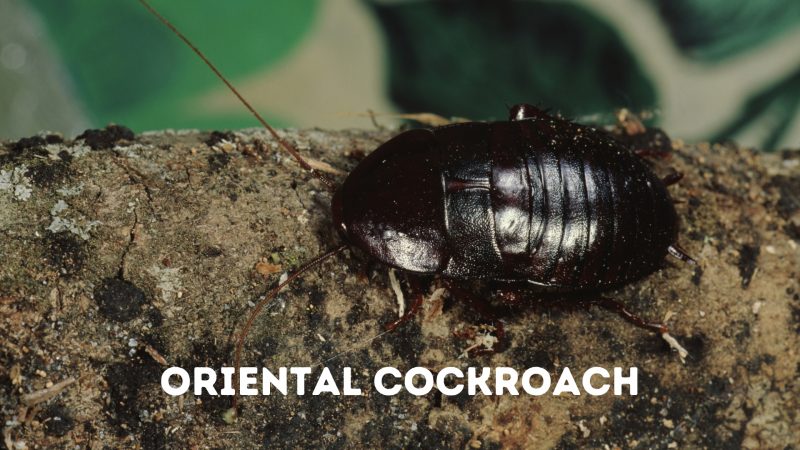
Oriental Cockroach
- Size & Color: ~1–1.25+ in; dark brown to black, often described as large and glossy when moist.
- Distinctive Marks: Females are wingless or have very reduced wings; males have short wings that do not cover the full abdomen.
- Typical Hiding Places: Dark, damp, cool sites near the ground: under refrigerators, near leaky pipes, catch basins, and exterior foundation openings. In the United States this species is commonly reported in the Northwest, Midwest, and Southern regions.
Quick checklist for field ID:
- Dark, almost black color
- Preference for damp, cool areas
- Reduced wings on females
Smoky Brown Cockroach
- Size & Color: ~1.5–2 in; uniformly dark brown to nearly black, often with a somewhat shiny appearance.
- Distinctive Marks: Generally lacks a contrasting pale band; uniformly darker than the American cockroach.
- Typical Hiding Places: Mostly outdoor; under bark, in mulch, and sometimes brought inside on firewood or landscaping materials.
Quick checklist for field ID:
- Large, dark, and shiny
- Typically an outdoor species
- Often attracted to porch lights and exterior lighting at night
Asian Cockroach
- Size & Color: ~0.5–0.75 in; light brown.
- Distinctive Marks: Dark stripes on the pronotum similar to the German cockroach, making visual distinction difficult without close inspection.
- Typical Hiding Places: Primarily outdoors in leaf litter and grassy areas; strongly attracted to light sources and commonly seen flying toward lamps at night.
Quick checklist for field ID:
- Looks like German cockroach but is usually found outdoors
- Reads strongly to light at night
- Small size with pronotal stripes
Pictures of the Most Common Types of Cockroaches | Picture Identification
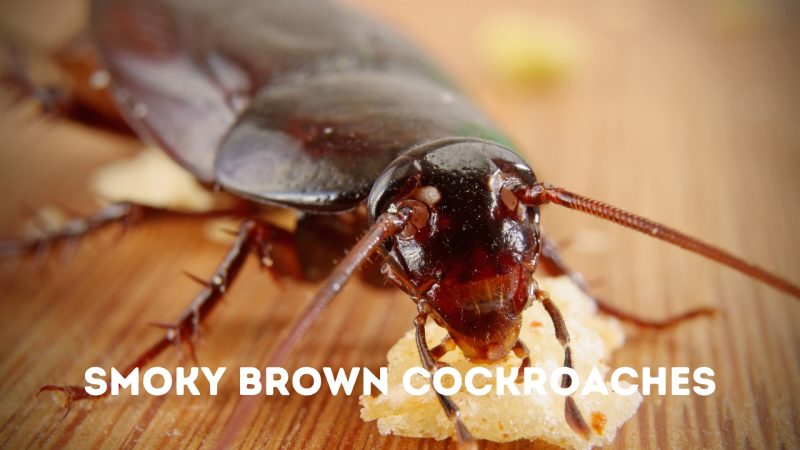
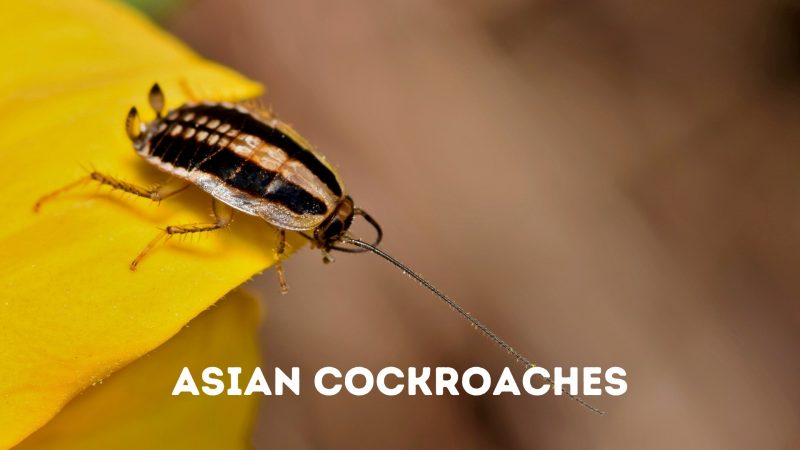
Types of American Cockroaches: How to Identify Them?
The American cockroach is one of the larger cockroach species commonly encountered around buildings. Although sometimes called the “water bug,” it is not aquatic in the scientific sense. Native ranges trace to the Old World (parts of the Middle East and Africa) and it was introduced to the Americas centuries ago. Today it is widespread across the United States and globally in warm, humid regions.
Identification is generally simple due to its size: about 1.5–2 in long, reddish-brown, often with a lighter band just behind the head. These roaches are active when temperatures are warm — commonly above ~70°F; below that they slow down and hide more.
There are many other cockroach species in the U.S. with varied histories. Brown-banded roaches arrived in the early 20th century (reported spread around 1903). The German cockroach is now a cosmopolitan indoor pest found on most continents. The oriental cockroach is reported commonly in regions including the Northwest, Midwest, and Southern United States; it prefers cooler, damper microhabitats near foundations and drains.
Types of Bugs That Look Like Cockroaches
Accurately identifying the insect you see helps pick the right response. These short comparisons list the primary field differences so you can decide: roach or look-alike?
Cockroaches vs. Beetles
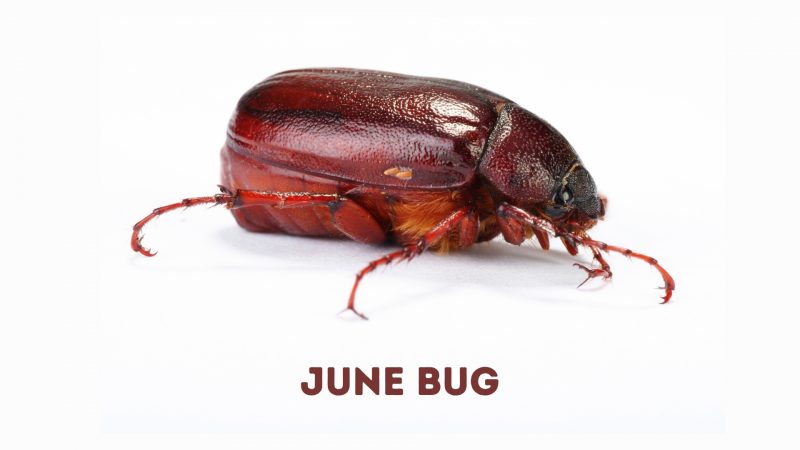
Beetles (for example, June bugs) can resemble roaches at a glance. Use this checklist to tell them apart:
- Body shape: beetles are usually rounder; roaches are flattened and oval.
- Antennae: roaches have long, slender antennae; many beetles have shorter or clubbed antennae.
- Wing visibility: roaches often have visible folded wings on their backs; beetles typically have hardened wing covers (elytra) that create a different sheen.
- Behavior and attraction: many beetles are attracted to light; roaches are often nocturnal and hide in cracks during the day.
Cockroaches vs. Water Bugs (True Water Insects)
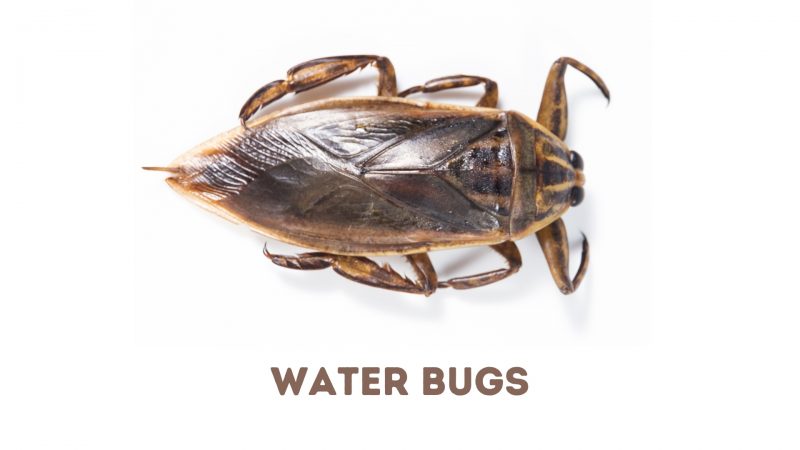
Some people call certain roaches “water bugs,” but true aquatic water bugs are different. Quick differences:
- Antennae: aquatic water bugs typically lack long antennae; roaches have long antennae.
- Legs: many water bugs have raptorial or paddle-like front legs adapted to swimming and capturing prey; roach legs are not modified that way.
- Habitat: water bugs live in or on water; roaches live on land and in building interiors.
Cockroaches vs. Bed Bugs
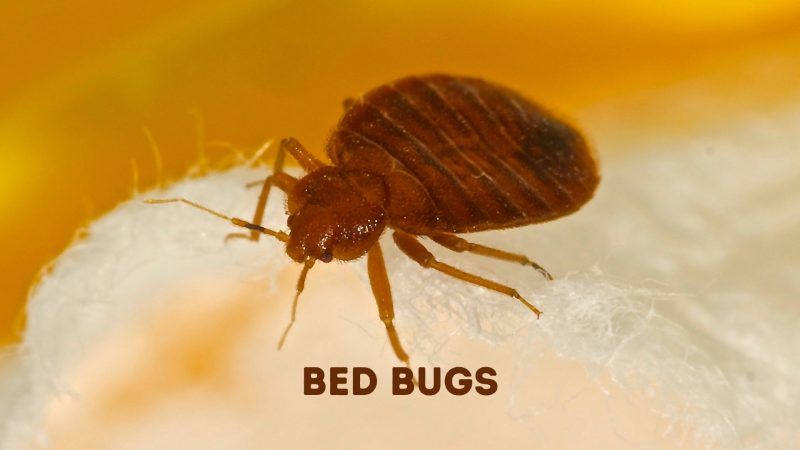
Bed bugs sometimes get mistaken for baby roaches. Here’s how to check:
- Shape: bed bugs are flattened and broadly oval; roach nymphs are elongated with visible legs and antennae.
- Color: bed bugs are reddish-brown after feeding; young roaches are usually tan to brown.
- Movement: bed bugs do not run quickly and do not fly; roach nymphs are mobile and will scurry away.
Cockroaches vs. Crickets
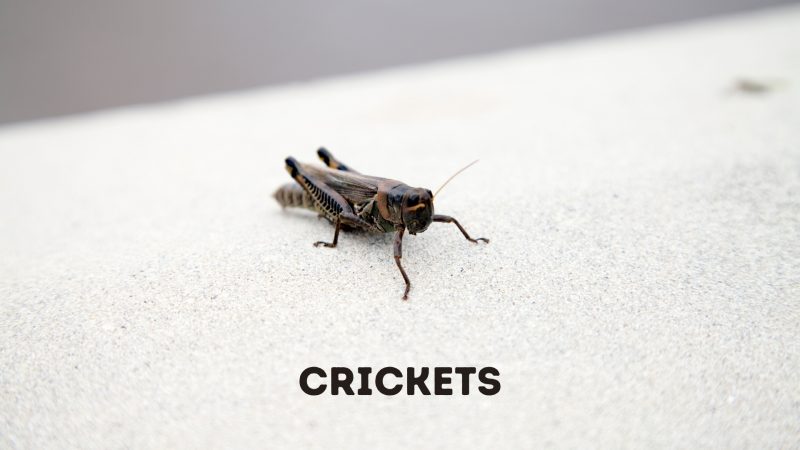
Crickets differ from roaches in a few clear ways:
- Hind legs: crickets have enlarged hind legs for jumping; roaches do not.
- Sound: crickets chirp by rubbing wings together; roaches are silent.
- Escape response: crickets jump when threatened; roaches run or fly away.
Cockroaches vs. Termites
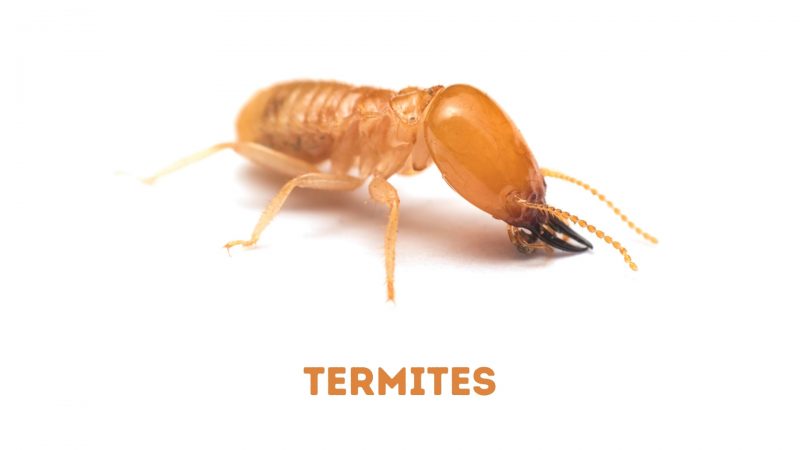
These two groups are related but distinct. Use this checklist:
- Antennae: termites have short, bead-like antennae; roaches have long, thin antennae.
- Body consistency: termites often have softer, more uniform bodies; roaches are flattened and more robust.
- Social behavior: termites are strongly social (colonial) and often found in large groups inside wood; most roaches are more solitary and opportunistic feeders.
Types of Flying Cockroaches — What to Expect
Wings are common but functional flight varies by species. The American cockroach has wings and may glide short distances but typically avoids sustained flight. The Asian and smoky brown cockroaches are more likely to fly and are attracted to light — you may see them at porch lights or around lamps in warm months.
Here are practical takeaways about flying behavior so you don’t need to click away for basics:
- Which species fly: Asian and smoky brown cockroaches are among the more flight-capable household-associated species; American cockroaches can glide but rarely sustain long flights.
- When they fly: flight activity usually peaks on warm, humid nights; they are primarily nocturnal so sightings at night are most likely.
- How they enter homes: flying types are attracted to light and can enter through open windows, doors, or gaps around screens; sealing openings and turning off exterior lights at night reduces attraction.
Even if you prefer a deep dive, this short summary covers the essentials so you can act immediately: reduce outdoor lighting, close windows/screens at dusk, and inspect eaves and entry points for gaps.
What Are the Worst Types of Cockroaches to Have?
Any roach inside a home is unwelcome, but the German cockroach is often considered the most problematic for several reasons.
- Rapid reproduction: German roach nymphs can reach adulthood in about 3 months under favorable conditions (compared with roughly a year for some other species). According to pest-management data, one female can lay up to 30 eggs per ootheca, and multiple oothecae over a reproductive cycle make population explosions possible (these stats come from species-specific reproduction studies and extension resources).
- Close association with people: German cockroaches prefer human dwellings and are well-adapted to kitchen and food-prep areas.
- Diet and movement: They are omnivorous scavengers and will feed on crumbs, grease, paper, and decaying organic matter.
- Climbing ability: Sticky pads on their feet let them scale smooth surfaces, making control in kitchens and cabinets harder.
- Health concerns: German roaches are linked to mechanical spread of pathogens (dysentery, salmonella, gastroenteritis are all reported in extension and public-health sources as potential concerns) and their allergens (feces, shed skins) can trigger asthma and allergic reactions.
Bottom line: if you spot the telltale small tan roach with stripes in kitchens, act quickly. Containment and professional advice are often needed because of their reproductive rate and indoor habits.
List of Sources
Hahn J., Ascerno M., Cockroaches, University of Minnesota

- Bed Bug Surge 2025: How to Detect, Prevent, and Safely Eliminate Infestations in Top U.S. Cities - June 18, 2025
- Asian Needle Ants Invade US Homes: 2025 Guide to Identification, Risks, and Effective Control - June 11, 2025
- New World Screwworm Alert: How US Livestock Owners Can Prevent Outbreaks and Protect Herds [Summer 2025 Update] - June 8, 2025