
Squirrels are hard to hate until one moves into your attic, strips your bird feeder, or digs up every bulb you planted. The good news is that getting rid of them is not about finding the right spray or gadget. It is about shutting them out. Squirrels are rodents, so they gnaw, and no smell, sound, or plug-in device reliably drives them off for long. What works is unglamorous and permanent: seal the way in with metal, cut off the food and the easy roof access, and if they are already inside, evict them with a one-way door before you seal.
The short answer: first work out which problem you have, because they need opposite solutions. Squirrels in your attic, soffit, or walls are the serious case (they gnaw wiring and can raise a litter in there), and the fix is a one-way exclusion door followed by sealing every opening with half-inch hardware cloth or sheet metal. Squirrels in the yard, garden, or bird feeder are a nuisance you solve by protecting the target with baffles, cages, and smarter plant and seed choices. Skip the ultrasonic repellers, fake owls, and mothballs. And before you trap or relocate anything, check your state wildlife laws, because in most states tree squirrels are protected game animals.
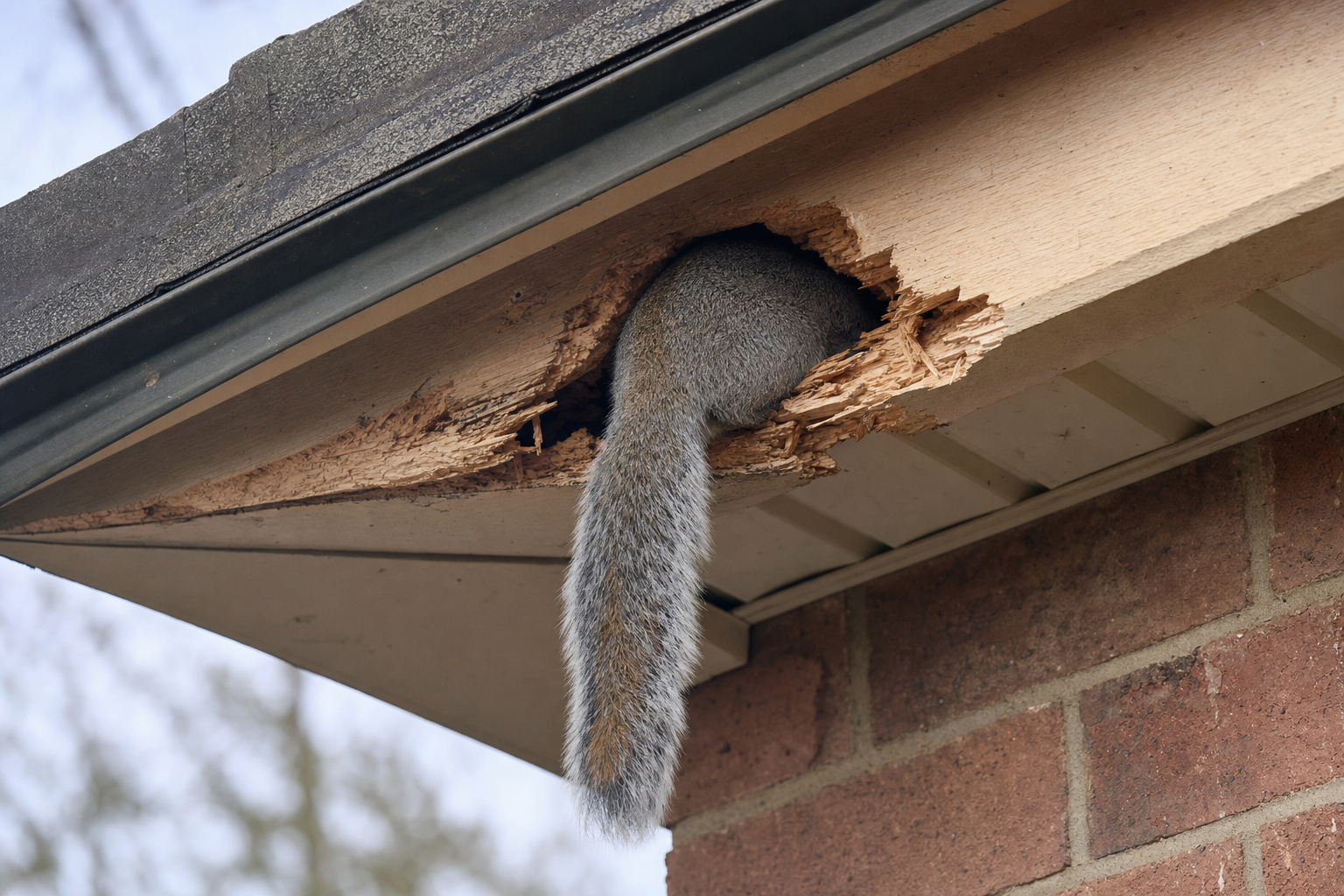
First, Figure Out Which Squirrel Problem You Have
Almost every mistake in squirrel control comes from treating the wrong problem. There are two, and the solution for one does nothing for the other.
- Squirrels in the structure (attic, soffit, chimney, wall void). This is the one that costs you money. They gnaw on wires, which is a genuine fire risk, soil insulation, and often have a nest of young inside. This is an exclusion job, not a repellent job.
- Squirrels in the yard, garden, or at the feeder. This is a nuisance. You will not clear squirrels off your whole property, and you do not need to. The realistic goal is to protect the feeder, the bulbs, or the raised bed you actually care about.
It also helps to know which squirrel you are dealing with, because one of them gives itself away by the clock.
| Squirrel | Where you find it | Active when | What it means for control |
|---|---|---|---|
| Eastern gray | Most common; attics, chimneys, feeders | Daytime | Daytime attic noise; exclude and remove attractants |
| Fox squirrel | Largest tree squirrel; same spots as gray | Daytime | Same exclusion and feeder tactics as gray |
| Red (pine) squirrel | Smaller, bold; cabins, sheds, attics | Daytime | Hoards food indoors; usually removed by trapping plus sealing |
| Flying squirrel | Attics, often many at once | Night | Scratching heard at night points here; they den in groups, so one-and-done removal fails |
| Ground squirrel | Burrows in lawns and fields (western US) | Daytime | A different animal entirely; controlled at the burrow, not by attic exclusion |
If you are hearing scratching in the ceiling at night, you likely have flying squirrels rather than gray squirrels, and because they roost communally you have to exclude the whole group. For more on telling species apart, see our guide to the types of squirrels and whether squirrels are active at night.
How to Get Rid of Squirrels in the Attic or Walls
This is the problem worth doing carefully. Rushing it can trap a squirrel inside your wall or seal a mother away from a nest of babies, which turns a small problem into a chewed-open, foul-smelling one. Work through these steps in order.
1. Find every opening
Walk the outside of the house and look along the roofline for the way in: rotted soffit and fascia boards, unscreened gable, ridge, and attic vents, an uncapped chimney, gaps where the roof meets the wall, and holes around utility lines. Squirrels often start with a small existing gap or knothole and gnaw it wider, so a finished entry hole is usually one to three inches across. Mark every opening you find, because you have to seal all of them.
2. Check the calendar before you seal anything
Squirrels raise young in two windows, roughly February through May and again August through October. If you close them out during those times, you can seal a litter of dependent babies inside, where they will die and their mother will chew frantically to reach them. If it is baby season, wait until you are sure the young are mobile and leaving with the mother, or hire a pro who knows how to reunite a family. Our guide on when squirrels have babies and the one on what squirrel nests look like help you judge whether young are present.
3. Evict them with a one-way door
The humane, effective way to clear an attic is a one-way excluder mounted over the main entry hole. It lets a squirrel climb out to feed and then blocks its return. Use a spring-loaded one-way door with a wide apron (at least a foot square) around the hole, or an improvised tunnel of four-inch pipe angled down so they can leave but not re-enter. Leave it up for several days until all activity stops.
No products found.
4. Confirm the attic is empty
Before you close the hole, prove nobody is home. Loosely stuff the opening with crumpled newspaper and leave it for three days and nights. If the plug stays undisturbed, the squirrels are gone. If it gets pushed out, a squirrel (or young) is still inside, so wait. Sealing an animal in is the single worst mistake here, because it will do far more damage chewing its way back out.
5. Seal it shut with metal
Now make the repair permanent. Cover and close every opening with half-inch galvanized hardware cloth (a quarter-inch mesh also keeps out mice and rats), sheet metal, or aluminum flashing. Do not rely on expanding foam, caulk, plastic, or wood alone, because a squirrel will gnaw straight through them. Cap the chimney with a proper cap or spark arrestor, and screen vents from the inside without blocking airflow.
No products found.
No products found.
6. Fix what they chewed
Once the attic is sealed, check for gnawed wiring and have any damage inspected by a licensed electrician, since chewed insulation is a real fire hazard. Then clean up nesting material and droppings safely (see the disease section below). For the specific attic playbook, see our detailed guide on getting rid of squirrels in the attic.
How to Keep Squirrels Out of the Yard, Garden, and Feeders
Outdoors you are not evicting squirrels, you are defending specific targets. Pick your battles and protect what matters.
Protect the bird feeder
Placement beats every gadget. Set the feeder on a pole at least six feet off the ground and at least ten feet from any launch point (a tree, fence, roof, or railing a squirrel can jump from). Add a baffle, a smooth dome or cone, at least four feet up the pole so they cannot climb past it, or a tilting baffle above a hanging feeder. Weight-activated feeders that close under a squirrel help but are often defeated, so combine them with good placement.
No products found.
You can also change the menu. Squirrels dislike safflower seed, which cardinals, chickadees, and finches still eat, and birdseed treated with capsaicin (hot pepper) deters squirrels while leaving birds unbothered, because birds do not react to capsaicin the way mammals do. That is the one repellent trick with solid science behind it, and it only works on the seed itself.
Protect the garden and bulbs
Squirrels dig up and eat tulip and crocus bulbs but leave daffodils, narcissus, and alliums alone, which are toxic and distasteful to them, so plant those where digging is a problem. For prized bulbs, cage them in hardware cloth at planting depth or lay chicken wire over the bed. A physical barrier is the only reliable answer here. For garden-specific tactics, see how to keep squirrels out of the garden and whether chicken wire keeps squirrels out.
Cut the highways to your roof
Trim tree limbs back six to eight feet from the house so squirrels cannot leap onto the roof. This reduces access rather than eliminating it (a determined squirrel can still jump a gap), but it takes away the easy route. Around an isolated tree or pole, a two-foot band of smooth sheet metal fixed about six feet up stops them climbing it at all.
Do Squirrel Repellents Actually Work?
This is where most money and effort get wasted. Wildlife agencies and the FTC have looked at these products, and the honest picture is not flattering.
| Method | What the evidence says | Verdict |
|---|---|---|
| Ultrasonic and electronic repellers | The FTC has warned makers their claims lack support, and wildlife experts find squirrels quickly ignore them; no frightening device has been proven to work | Does not work |
| Fake owls, hawks, and other scare decoys | Squirrels learn within days that a decoy poses no threat and go right back to feeding | Does not work |
| Mothballs and naphthalene | Using them against squirrels is off-label, which is illegal, and the fumes are toxic to people and pets; labels specifically say not to use them for squirrels indoors | Illegal and unsafe |
| Scent home remedies (peppermint, garlic, vinegar, coffee grounds) | No credible evidence they clear squirrels; any effect is brief at best | Unproven |
| Predator urine and granular repellents | May cause a short lull, but do not give reliable, lasting protection and are rarely tested | Limited |
| Motion-activated sprinklers | The most promising deterrent because water plus surprise resists habituation, but there is no solid study for squirrels specifically | Sometimes helps |
| Capsaicin-treated birdseed | Backed by research; birds are unaffected by hot pepper while squirrels avoid the treated seed | Works (feeder only) |
The takeaway: no smell, sound, or gadget reliably evicts squirrels, so spend your effort on exclusion and physical barriers instead. If you want the full rundown, see our guides to the best squirrel repellents, the scents squirrels hate, and whether wind chimes scare squirrels away.
Is It Legal to Trap or Relocate a Squirrel?
This trips up a lot of well-meaning homeowners, so it is worth knowing before you set a trap. In most US states, tree squirrels (gray, fox, red, and flying) are classed as game or protected wildlife, not free-for-all pests, and the rules vary by state and even by species. Two things follow from that:
- Relocating a squirrel is often illegal. Many states prohibit releasing a trapped squirrel anywhere but the property where you caught it, without a permit. It is also usually a death sentence for the animal; one study of relocated gray squirrels found about 97 percent soon died or vanished from the release site. Live-trapping and driving it to the woods is neither as legal nor as humane as it feels.
- Poison is not a legal option for tree squirrels. No rodenticide is labeled for gray, fox, or red squirrels, so using rat or mouse bait on them is off-label and against federal law, on top of the risk of a squirrel dying in your wall. (Ground squirrels in the western US are a separate, non-game animal that is managed with registered baits and burrow fumigants, which is a different situation.)
If you do use a live trap, do it as a stopgap alongside sealing, and only after you have confirmed what your state allows. A cage trap works, but reinvasion is guaranteed if the openings are still open. The bottom line: before you trap, relocate, or kill a squirrel, confirm the rules with your state wildlife or DNR agency. Our guide to squirrel removal covers trapping in more detail.
No products found.
Are Squirrels Dangerous? Disease and Bite Safety
Squirrels are far less of a health threat than the scare stories suggest, and the biggest myth is worth correcting first: squirrels almost never carry rabies. Public-health agencies note that small rodents like squirrels are rarely infected and have not been known to give rabies to a person, so a bite from one does not automatically mean rabies shots. Report any bite to your local health department and let them make that call.
The real risks are more mundane. Squirrels and their droppings and urine can carry leptospirosis and, rarely, salmonella, and their nests bring fleas, ticks, and mites into contact with your home. A bite or scratch can get infected like any wound, so wash it well with soap and running water and see a doctor if it is deep or dirty. (Plague is tied to certain western ground squirrels and their fleas, not to the tree squirrels in your attic, and hantavirus comes from deer mice, not squirrels.)
When you clean up nesting material and droppings, do it the way health agencies recommend so you do not stir dust into the air:
- Do not sweep or vacuum droppings, urine, or nests.
- Open windows and air out the space for about 30 minutes first, and wear gloves and a mask.
- Spray the area with a disinfectant or bleach solution and let it soak for five minutes.
- Wipe everything up with paper towels, bag it, and seal the bag.
- Wash your hands thoroughly afterward.
For more, see whether squirrel feces can make you sick and what to do when a squirrel bites you.
When to Call a Wildlife Control Pro
You can handle most yard and feeder problems, and a straightforward attic sealing, yourself. Bring in a licensed wildlife control operator when there are babies present during breeding season and they need to be reunited with the mother, when squirrels have chewed wiring or are deep in a wall void or chimney you cannot safely reach, when the entry points are high on the roofline, or when your state requires a permit or licensed operator to trap. A good pro finds every hidden opening, evicts the animals humanely, and does the exclusion so it lasts.
How to Keep Squirrels From Coming Back
- Inspect the roofline each season and re-seal any new gaps with hardware cloth or metal, never foam alone.
- Cap the chimney and screen every vent.
- Keep tree limbs trimmed six to eight feet back from the roof.
- Clean up fallen seed, nuts, and fruit, and secure garbage so nothing draws them in.
- Place feeders well away from launch points and baffle them, or switch to safflower or capsaicin-treated seed.
- Plant daffodils and alliums instead of tulips, and cage prized bulbs.
- Skip the gadgets. Ultrasonic devices, fake owls, and mothballs are not a lasting fix.
Related Squirrel Guides
- How to get rid of squirrels in the attic
- How to keep squirrels out of the garden
- Does chicken wire keep squirrels out?
- Best squirrel repellents
- Scents squirrels hate
- Do wind chimes scare squirrels away?
- Squirrel removal and trapping
- Types of squirrels
- What do squirrel nests look like?
- Can squirrel feces make you sick?
- What to do when a squirrel bites you
- Are squirrels active at night?
- When do squirrels have babies?
- Mouse, rat, and squirrel droppings compared
Frequently Asked Questions
What is the fastest way to get rid of squirrels?
For squirrels in the yard or at a feeder, the fastest fix is a physical barrier, a baffle on the feeder pole or a cage over the bulbs. For squirrels in the attic, the fastest lasting fix is a one-way exclusion door over their entry hole, followed by sealing every opening with metal once you have confirmed they are out. Sprays and gadgets feel fast but do not actually solve it.
Do squirrel repellents actually work?
Mostly no. Ultrasonic devices, fake owls, mothballs, and scent home remedies do not reliably drive squirrels off, and squirrels quickly learn to ignore them. The two exceptions are narrow: motion-activated sprinklers can help in the yard, and capsaicin-treated birdseed keeps squirrels off a feeder without bothering birds. Everything else is better spent on exclusion.
Is it legal to trap and relocate a squirrel?
Often not. In most states tree squirrels are protected game animals, and many states make it illegal to release a trapped squirrel anywhere but where you caught it without a permit. Relocation also kills most squirrels within weeks. Always check your state wildlife or DNR agency rules before you trap, relocate, or kill one.
Do squirrels carry rabies?
Almost never. Health agencies note that small rodents like squirrels are rarely infected with rabies and have not been known to transmit it to people, so a squirrel bite does not automatically call for rabies treatment. Report any bite to your local health department and let them decide. The more realistic risks are ordinary wound infection and parasites from their nests.
How do I get squirrels out of my attic without harming the babies?
Time it around breeding season, roughly February through May and August through October, when young are likely present. If babies are inside, wait until they are old enough to leave with the mother, or hire a pro who can reunite the family, then use a one-way door so the adults leave on their own. Confirm the attic is empty with the newspaper test before you seal it shut.

- How to Get Rid of Copperheads | Practical Guide - August 27, 2023
- How to Get Rid of Corn Snakes | What Makes Them Aggressive? - August 27, 2023
- How to Get Rid of Alligators | Safety Measures and Removal Methods - July 16, 2023