

Those tiny black flies bouncing around your kitchen are almost always one of four pests: fruit flies (near the fruit bowl and trash), drain flies (crawling on walls near the sink), phorid flies (darting in quick zigzags), or fungus gnats (hovering over your houseplants). They look nearly identical at a glance, but each breeds in a different place, so the fix depends on which one you have.
The fastest way to get rid of them: find and destroy the breeding site, not just the adults you can see. Wipe down counters, take out the trash, and chase the source to a drain, an overripe banana, or a soggy plant pot. The same source-first method works for every fly in the house; see how to get rid of flies. Then set an apple cider vinegar trap to mop up the stragglers. Clean out the source and most kitchens are fly-free within 3 to 7 days. Spraying the adults alone never works, because new flies keep hatching from the slime you can’t see.
Summer makes it worse. Warm June-through-August kitchens speed up the fly life cycle, so a few flies can become a swarm in under two weeks. This guide shows you how to tell the four types apart, track down where they are coming from, and clear them out for good.
Small Black Flies in the Kitchen: Quick Identification
Before you treat anything, work out which fly you are dealing with. The quickest tell is where they gather: around fruit and trash, on the wall near a drain, in fast zigzags across surfaces, or over potted plants. Use this table to narrow it down.
| Fly type | Size & look | Where you see them | Breeds in |
|---|---|---|---|
| Fruit fly | ~1/8 in; tan thorax, dark belly, red eyes | Hovering over fruit bowl, recycling, drinks | Overripe produce, spills, damp recycling |
| Drain fly | ~1/8 in; fuzzy, moth-like, gray to black | Resting on walls/ceiling near the sink | Slime (biofilm) inside drains and pipes |
| Phorid fly | 0.5–5.5 mm; humpbacked, runs more than flies | Darting in quick zigzags across counters | Decaying matter, garbage disposals, clogged drains |
| Fungus gnat | <1/8 in; slender, mosquito-like, long legs | Flying around houseplants and windows | Moist potting soil and overwatered plants |
If they swarm the fruit bowl, suspect fruit flies. If they sit on the wall above the sink and fly in clumsy short hops, you have drain flies. If they zip around in fast, erratic lines and rarely settle, they are likely phorid flies. And if they rise in a cloud whenever you water a plant, those are fungus gnats. The sections below cover each one in detail.
Why Are There So Many Small Black Flies in Your Kitchen?
A sudden swarm almost always means something nearby is wet, sweet, or rotting. These flies don’t wander in by accident and multiply on the countertop; they are hatching from a hidden breeding site and you are seeing the adults. Common triggers include:
- An overripe banana, tomato, or onion on the counter, or fruit decaying at the bottom of the bowl
- Food sludge in a drain: the kitchen sink, garbage disposal, or a rarely used basement floor drain
- A full or sticky trash can or recycling bin, especially one with juice or beer residue
- An overwatered houseplant whose potting soil never dries out
- A spill under the fridge or stove you forgot about, or a damp mop left in a bucket
Warm weather pours fuel on the fire. From June through August, higher kitchen temperatures shorten the fly life cycle, so the eggs laid in that forgotten banana hatch faster and the population snowballs. Find the wet, rotting source and the swarm collapses on its own.
Small Black Flies | Identification, Habitat, and Behavior
Several flies invade kitchens, but the four below cover almost every case. Here is how to tell them apart and where each one breeds.
Related: Little Black Bugs That Bite | Identification, Habitat, and Behavior
Drain Flies
Identification
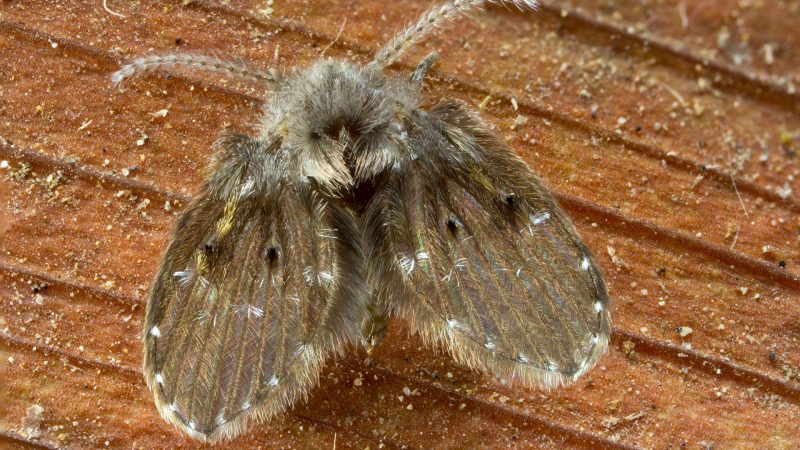
Drain flies are moth-like flies that hang around sinks and drains, which is why people also call them moth flies or sink flies. They are about 2 mm long, with round, fuzzy bodies and small, hairy wings that range from pale gray to nearly black. Because they are weak fliers, you will usually spot them resting on the wall or ceiling near the sink rather than buzzing across the room. When disturbed, they make short, clumsy hops instead of flying off.
Habitat
Drain flies breed in the slimy organic film, called biofilm, that builds up inside drains and pipes. Look for them around:
- Kitchen sinks and garbage disposals
- Shower, bathtub, and basement floor drains
- Septic tanks, sewers, and storm drains with standing water
- Compost piles, wet mops, and buckets left to sit
The common thread is stagnant, dirty water. Females lay their eggs in the gelatinous gunk that lines the pipe, so the larvae develop completely out of sight. That is why drain flies seem to “come back” no matter how many adults you swat: the breeding site is untouched.
Behavior
Drain flies are most active at night and are weak flyers. A single female can lay 30 to 100 eggs at a time, and in a warm pipe those eggs hatch in under 48 hours, so a colony builds fast even though each adult lives only about two to three weeks. They don’t bite or damage your home, but they breed in filth and can be a real nuisance. A persistent drain-fly problem is often a sign of a slow or partially clogged drain.
Related: Drain Flies Control: How To Get Rid of Drain Flies?
Fruit Flies
Identification
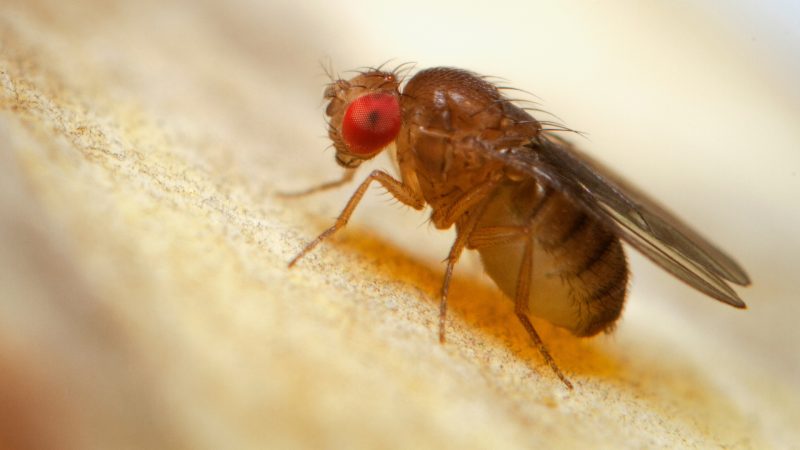
Fruit flies are tiny, oval flies about 1/8 inch long. Their thorax is tan and their belly is darker, but the giveaway is their bright red eyes. Other traits include:
- Red eyes (some are brownish-yellow to brownish-black)
- A tan-to-brown body with a slightly striped abdomen
- Slow, hovering flight right over food and drinks
If a small fly is circling your fruit bowl or a glass of wine, it is almost certainly a fruit fly.
Habitat
Fruit flies turn up anywhere food ferments: homes, restaurants, grocery stores, and bars. They ride into your kitchen on produce you just bought and breed on overripe fruit, spills, and the sticky film inside recycling bins.
They also slip in through open windows, torn screens, and gaps around exterior doors, and they are drawn to gardens, compost, and loosely covered trash.
Behavior
A single female fruit fly can lay around 500 eggs, and the whole egg-to-adult cycle takes just about a week in warm weather. That explosive math is why a couple of flies become dozens almost overnight, and why cutting off their food source matters more than killing the adults.
Fruit flies feed on rotting fruit, vegetables, and other fermenting matter, plus any handy sugar source. With food on the counter year-round, indoor populations can stay active in every season.
Related: How Many Types of Fruit Flies Are There? | Information and Facts
Phorid Flies
Identification
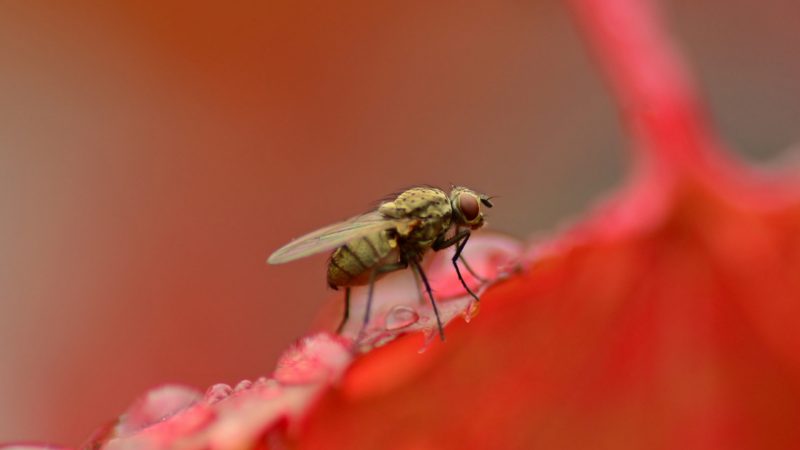
Phorid flies look a lot like fruit flies, in colors from black to dull brown or yellow, but two things set them apart: an arched, humpbacked back (hence the nickname “humpbacked flies”) and a habit of running across surfaces in quick zigzags rather than flying. They are 0.5 to 5.5 mm long and weak in the air. The larvae have a shiny black head on a long, whitish, legless body.
Habitat
Phorid flies dash across tables, screens, walls, and plant leaves. They breed rapidly in rotting organic matter, which earns them other nicknames like “scuttle flies,” “coffin flies,” and “sewer flies.” Indoors, look for them breeding in:
- Garbage disposals, drains, and grease traps
- Trash containers, recycling bins, and dumpsters
- Rotting produce and damp crawl spaces
Anywhere moist organic matter collects can support them. They are common in homes, restaurants, hospitals, and food warehouses.
Behavior
A female phorid fly can lay as many as 700 eggs over a roughly 25-day life. They feed on decomposing plant and animal matter, including sewage and household waste. Unlike fruit flies, phorids are not drawn to vinegar, so a standard apple cider vinegar trap won’t catch them, so you have to clean out the rotting source instead.
Fungus Gnats
Identification
Fungus gnats have slender legs and segmented antennae longer than their heads, giving them a delicate, mosquito-like look. Adults are about 1/16 to 1/8 inch long with light gray to clear wings. They can fly, but near the soil they tend to hop and flutter weakly from spot to spot.
Habitat
Fungus gnats live in the moist potting soil of indoor houseplants, where their larvae feed on fungus and organic matter. They also infest compost, growing media, and damp mulch. If your “kitchen flies” only appear near a windowsill herb pot or a houseplant, you are dealing with fungus gnats, not drain or fruit flies.
Behavior
Fungus gnats are drawn to light, so you will often see them at windows. They are poor fliers and stay close to home, laying tiny eggs in damp soil and organic debris. They feed on fungi, root hairs, grass clippings, leaf mold, and compost, which makes them a familiar pest in greenhouses, nurseries, and overwatered potted plants.
Related: How to Get Rid of Gnats in House? | 9 Effective Ways
Where Are the Black Flies in My Kitchen Coming From?
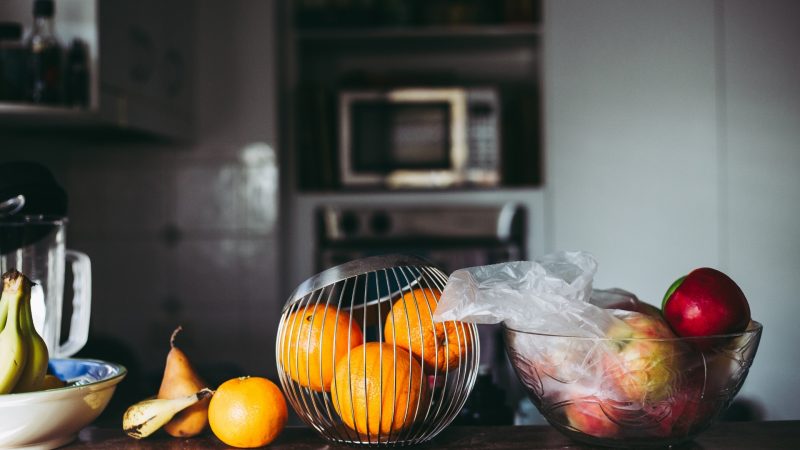
The adults you see are coming from a nearby breeding site, usually within a few feet. Trace it by matching the fly to its favorite spot: fruit flies to overripe produce, spills, and recycling; drain and phorid flies to the slime inside a sink, disposal, or floor drain; fungus gnats to a soggy plant pot. Check the trash, the bottom of the fruit bowl, the dish rack, and any standing water before you treat.
How to Find Which Drain Is Breeding Them
If the flies cluster near a sink and you can’t tell which drain is the source, run a simple overnight test. It tells you exactly where to focus your cleaning instead of guessing.
The tape test:
- Before bed, dry the rim of each suspect drain with a paper towel.
- Stretch a strip of clear packing tape across the opening, sticky side down, leaving about a quarter of the drain uncovered so flies can still rise.
- Leave it overnight (or over a weekend for a slow infestation).
- In the morning, the drain with flies stuck to the tape is your breeding source.
Check every drain in the room (kitchen sink, disposal, dishwasher drain, and any floor drain), because more than one can be active at once. A clear plastic cup smeared with a little petroleum jelly and flipped upside down over the drain works the same way. If flies keep coming back after you clean the obvious drains, look for hidden moisture: a basement floor drain, a sump pit, a leaking trap under the cabinet, or the sink’s overflow hole.
How to Prevent Small Black Flies in Your Kitchen
Prevention is mostly about denying flies the wet, rotting food they breed in. Build these habits and most kitchens stay fly-free:
- Empty the trash often and keep bins tightly covered; rinse out sticky residue from the can and the recycling.
- Wipe up fruit and vegetable peels and counter spills right away.
- Toss overripe fruit and store the rest in the refrigerator instead of the counter.
- Rinse produce after shopping to wash off any eggs or larvae hitchhiking on the skin.
- Run hot water and the garbage disposal daily so food sludge never accumulates in the drain.
- Don’t overwater houseplants; let the top inch of soil dry out between waterings.
- Disinfect countertops and keep the sink and dish rack free of standing water.
How to Get Rid of Small Black Flies in the Kitchen
Treatment works in two parts: destroy the breeding site so no new flies hatch, then trap the remaining adults. Skip the first part and the problem comes straight back. Match the method to your fly:
Clean the Drain (for Drain and Phorid Flies)
This is the single most important step if the flies live near your sink. You need to scrub out the biofilm where the larvae develop, because pouring chemicals on top of it rarely reaches them.
- Pour a pot of boiling water down the drain to loosen the gunk.
- Add about half a cup of baking soda, then a cup of white vinegar; let it fizz and sit for an hour (or overnight for a stubborn case).
- Scrub the inside of the drain and pipe with a long stiff brush to physically remove the slime the larvae cling to.
- Flush with another pot of boiling water.
- Repeat for a few days, and pour a baking-soda-and-vinegar mix down quiet drains every couple of weeks as maintenance.
Avoid dumping bleach as your only fix. It can knock back surface flies but washes past the biofilm without removing it, so the larvae survive. Mechanical scrubbing is what breaks the breeding cycle. For a sink or bathtub drain, you can still flush a cup of diluted afterward to sanitize.
Set an Apple Cider Vinegar Trap (for Fruit Flies and Gnats)
This is the classic trap for fruit flies and fungus gnats, which are both drawn to the fermented smell.
- Fill a small bowl or jar with a few tablespoons of apple cider vinegar and a teaspoon of sugar.
- Add two to three drops of dish soap and stir. The soap breaks the surface tension so flies sink instead of landing and escaping.
- Cover the jar with plastic wrap and poke a few small holes (optional, but it stops flies climbing back out).
- Set it where the flies gather and refresh it every couple of days until they are gone.
Skip this one for phorid flies, which ignore vinegar, so cleaning the rotting source is your only real option.
Dry Out and Treat Plant Soil (for Fungus Gnats)
Vinegar traps catch adult gnats, but the larvae live in the soil, so you have to treat the pot. Let the top inch or two of soil dry out fully between waterings, since gnat larvae can’t survive dry soil. For a heavy infestation, water once with a solution of one part 3% hydrogen peroxide to four parts water, which kills larvae on contact, or top the soil with a half-inch of sand or gravel so females can’t reach it to lay eggs. Yellow sticky traps near the plant mop up the adults.
Use a Fly Spray on the Adults
A residual fly spray helps knock down adults while you fix the source, but it is a supplement, not a cure. Permethrin, a common fly-control insecticide derived from chrysanthemum extract, is the active ingredient in many of them. Spray only where flies congregate and always follow the label, especially around food-prep surfaces.
All you need to do is spray the in places where the flies are abundant, then wipe down any food-contact areas afterward.
No products found.
These are also among the best sprays for small black flies:
No products found.
Hire a Professional Pest Control Company
If the flies keep coming back after you have cleaned every drain and cleared the obvious food sources, the breeding site may be hidden: a cracked pipe, a wall void, or moisture under the floor. A pest control pro can find it, assess how bad the infestation is, and put together a treatment plan for your home.
How Long Does It Take to Get Rid of Them?
Once you remove the breeding source, the adults you can see die off within a few days, since most of these flies live only two to three weeks. Clean the drain or clear the rotting food thoroughly and a typical kitchen infestation clears in 3 to 7 days. If it drags on past two weeks, you have either missed a breeding site or there is more than one, so go back and run the drain tape test on every drain in the room.
Frequently Asked Questions
How do I get rid of tiny black flies in my kitchen overnight?
You can knock the adult population down overnight with an apple cider vinegar and dish soap trap, but you won’t be rid of them for good until you clean out the breeding site. Set the trap before bed, then the next morning clear the trash, scrub the drain, and remove any overripe produce.
Are small black flies in the kitchen dangerous?
They don’t bite people, and they aren’t dangerous in the way a sting is, but drain and phorid flies breed in filth and can carry bacteria from sewage onto food and surfaces. That makes them a sanitation problem worth clearing quickly, especially around food prep.
Why do the flies keep coming back after I clean?
Because the breeding site is still there. Adults hatch from slime in a drain, a forgotten piece of fruit, or wet plant soil. If you only kill the flies you see, new ones keep emerging. Find and destroy the source, and use the drain tape test if you can’t tell which drain is the culprit.
Does pouring bleach down the drain kill drain flies?
Not reliably. Bleach rushes past the gel-like biofilm where the larvae live without removing it. Physically scrubbing the drain with a brush, plus boiling water and a baking-soda-and-vinegar treatment, is what actually breaks the breeding cycle.
What is the difference between fruit flies and gnats?
Fruit flies are stout, tan, and have red eyes, and they swarm fruit and drinks. Fungus gnats are slender, dark, and mosquito-like, and they hover around houseplants. Drain flies, a third look-alike, are fuzzy and moth-like and rest on walls near the sink.
Related: Small Black Bugs In House | Identification and Control Guide
List of Sources
Hill, C. A., Platt, J., MacDonald, J. F. (2010). Black Flies: Biology and Public Health Risk. Purdue University Extension – Entomology.
Townsend, L. (2007). Drain Flies or Moth Flies. University of Kentucky.
Potter, M. F. (1994). Fruit Flies. University of Kentucky.
Elizalde, L., Folgarait, P. J. (2012). Behavioral Strategies of Phorid Parasitoids and Responses of Their Hosts, the Leaf-Cutting Ants. Journal of Insect Science.

- Bed Bug Surge 2025: How to Detect, Prevent, and Safely Eliminate Infestations in Top U.S. Cities - June 18, 2025
- Asian Needle Ants Invade US Homes: 2025 Guide to Identification, Risks, and Effective Control - June 11, 2025
- New World Screwworm Alert: How US Livestock Owners Can Prevent Outbreaks and Protect Herds [Summer 2025 Update] - June 8, 2025